Hacia una ley de atenuación sísmica para estimar INp mediante algoritmos genéticos
DOI:
https://doi.org/10.37636/recit.v9n4e481Palabras clave:
Ley de atenuación, Medida de intensidad sísmica, Algoritmos genéticos, Espectros de respuestaResumen
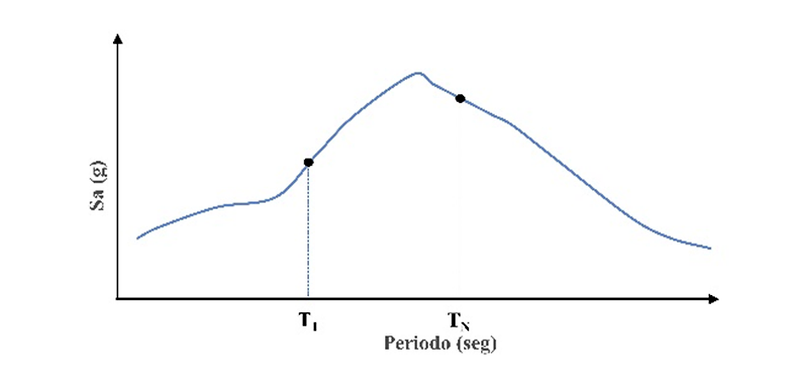
La predicción del movimiento del suelo a través de leyes de atenuación ha sido objeto de estudio por diversos investigadores. En la actualidad, en los códigos de construcción son implementadas medidas de intensidad sísmica tradicionales como la seudoaceleración para el periodo fundamental de la estructura Sa(T1), aceleración máxima del suelo (AMS), entre otras, que han mostrado una incertidumbre significativa al predecir las demandas sísmicas. Actualmente, existen medidas de intensidad sísmica que reducen de forma considerable la incertidumbre en la predicción de la respuesta estructural. Investigaciones previas han demostrado que la medida de intensidad sísmica INp cuantifica con mayor precisión las características del evento sísmico y la respuesta estructural ante acciones sísmicas. Por lo anterior, en este estudio se presenta una propuesta preliminar de ley de atenuación que estima el movimiento del suelo basado en una medida de intensidad sísmica avanzada INp. Dicha propuesta se desarrolla mediante la aplicación de algoritmos genéticos, herramienta metaheurística caracterizada por su elevada robustez y precisión. Durante el estudio, fueron generados espectros de respuesta INp a partir de una base de datos de eventos sísmicos interplaca registrados por estaciones de Ciudad Universitaria en la Universidad Nacional Autónoma de México. Finalmente, a través de la técnica de optimización, se estimaron los coeficientes de ajuste para los periodos estructurales seleccionados, lo que permitió obtener resultados satisfactorios al compararlos con los espectros de respuesta INp previamente generados.
Descargas
Referencias
[1] N. C. Donovan, “Earthquake Hazards for Buildings,” in Building Practices for Disaster Mitigation, National Bureau of Standards, U.S. Department of Commerce, Building Research Services 46, pp. 82-111, 1973.
[2] W. B. Joyner and D. M. Boore, “Peak Horizontal Acceleration and Velocity from Strong Motion Records Including Records from the 1979 Imperial Valley, California, Earthquake,” Bull. Seism. Soc. Am., Vol. 71, No. 6, pp. 2011-2038, 1981. https://doi.org/10.3133/ofr81365 DOI: https://doi.org/10.1785/BSSA0710062011
[3] D. M. Boore, W. B. Joyner and T. E. Fumal, “Equations for Estimating Horizontal Response Spectra and Peak Acceleration from Western North American Earthquakes: A Summary of Recent Work,” Seismological Research Letters, Vol. 68, No. 1, pp. 128-153, 1997. https://doi.org/10.1785/gssrl.76.3.368 DOI: https://doi.org/10.1785/gssrl.68.1.128
[4] L. Esteva and R Villaverde, “Seismic risk, design spectra and structural reliability,” Proc. 5th World Conf. Earthquake Eng., Rome, Italy, 1973, pp.2586-2597.
[5] J. Carballo, “Estudio de riesgo sísmico para Chílpancingo,” Tesis de Maestría. DEPFI, UNAM. Ciudad de México, México, 1994.
[6] J. D. García, “Estimación de parámetros del movimiento fuerte del suelo para terremotos interplaca e intraslab en México Central,” Tesis de Doctorado, Facultad de Ciencias Físicas, Universidad Complutense de Madrid, Madrid, España, 2006.
[7] M.A. Jaimes and A. D. García-Soto. “Updated ground motion prediction model for Mexican intermediate-depth intraslab earthquakes including V/H ratios,” Earthquake Spectra, vol. 36, No. 3, pp. 1298-1330, 2020. https://doi.org/10.1177/8755293019899947 DOI: https://doi.org/10.1177/8755293019899947
[8] G. P. Villalobos-Escobar et al. “Empirical Ground-Motion Relations in Northeastern México from intraplate moderate earthquakes,” Journal of Earthquake Engineering, vol. 27, No. 3, pp. 769-786, 2023. https://doi.org/10.1080/13632469.2022.2033363 DOI: https://doi.org/10.1080/13632469.2022.2033363
[9] P. P. Cordova, G. G. Deierlein, S. S. Mehanny, and C.A. Cornell, “Development of a two-parameter seismic intensity measure and probabilistic assessment procedure,” in the second US-Japan workshop on performance-based earthquake engineering methodology for reinforced concrete building structures, 2000, pp. 187–206. Disponible: https://apps.peer.berkeley.edu/research/peertestbeds/Cct/Cordova%20et%20al%202001.pdf
[10] E. Bojórquez and I. Iervolino, “Spectral shape proxies and non-linear structural response,” Soil Dynamics and Earthquake Engineering, Vol. 31, No. 7, pp. 996– 1008, 2011. https://doi.org/10.1016/j.soildyn.2011.03.006 DOI: https://doi.org/10.1016/j.soildyn.2011.03.006
[11] N. Buratti, “Confronto tra le performance di diverse misure di intensitá dello scuotimento sísmico,” Congreso Nacional de Ingeniería de Italia (ANIDIS), Bari, Italia, 2011.
[12] N. Buratti, “A comparison of the performances of various ground-motion intensity measures,” The 15th World Conference on Earthquake Engineering, Lisbon, Portugal, Sep. 24-28, 2012, paper No. 5499. Disponible: https://www.iitk.ac.in/nicee/wcee/article/WCEE2012_5499.pdf
[13] A. Modica and P. J, Stafford, “Vector fragility surfaces for reinforced concrete frames in Europe,” Bull Earthquake Eng., vol. 12, pp. 1725–1753, 2014. https://doi.org/10.1007/s10518-013-9571-z DOI: https://doi.org/10.1007/s10518-013-9571-z
[14] E. Javadi and M. Yakhchalian. “Selection of Optimal Intensity Measure for Seismic Assessment of Steel Buckling Restrained Braced Frames under Near-Fault Ground Motions,” Journal of Rehabilitation in Civil Engineering, vol. 7, No. 4, pp. 114-113, 2019. https://doi: 10.22075/jrce.2018.14908.1278
[15] N. Zavala et al., “Vector-Valued Intensity Measures Based on Spectral Shape to Predict Seismic Fragility Surfaces in Reinforced Concrete Buildings,” Buildings, vol. 13, No. 1, Art. No. 137, 2023. https://doi.org/10.3390/buildings13010137 DOI: https://doi.org/10.3390/buildings13010137
[16] J. Carvajal et al. “Comparing hysteretic energy and ductility uniform annual failure rate spectra for traditional and a spectral shape-based intensity measure,” Advances in Civil Engineering, vol. 2021, Art. No. 2601087, 2021. https://doi.org/10.1155/2021/2601087 DOI: https://doi.org/10.1155/2021/2601087
[17] K. W. Campbell, “Near-Source Attenuation of Peak Horizontal Acceleration,” Bull. Seism. Soc. Amer., Vol. 71, No. 6, pp. 2039-2070, 1981. https://doi.org/10.1785/BSSA0710062039
[18] O. W. Nuttli, and R. B. Herrmann, “Consequences of Earthquakes in Mississippi Valley,” ASCE Preprint 81-519, ASCE National Convention, St. Louis, MO, USA, 1981.
[19] K. W. Campbell and Y. Bozorgnia, “Near-Source Attenuation of Peak Horizontal Acceleration from Worldwide Accelerograms Recorded from 1957 to 1993,” Proc. 5th U.S. National Conf. Earthquake Eng., Vol. 3, Chicago, IL, USA, 1994, pp. 283-292.
[20] M. Bufaliza, “Atenuación de intensidades sísmicas con la distancia en sismos mexicanos,” Tesis de Maestría, Facultad de Ingeniería UNAM, Ciudad de México, México, 1984.
[21] M, Ordaz, J. M. Jara, y S. K. Singh, “Riesgo sísmico y espectros de diseño en el Estado de Guerrero,” Mem. VIII Congreso Nacional de Ingeniería Sísmica, Acapulco, México, 1989, pp. D40–D56.
[22] N.A. Abrahamson and W.J. Silva, “Empirical response spectral attenuation relations for shallow crustal earthquakes,” Seismological Research Letters, vol. 68, No. 1, pp. 94-127, 1997. https://doi.org/10.1785/gssrl.68.1.94 DOI: https://doi.org/10.1785/gssrl.68.1.94
[23] J. M. Jara y A. R. Sánchez. “Estimación de Riesgo Sísmico de Morelia,” Revista de la coordinación científica de UMNSH. No. 29, 2001.
[24] Q. Rodríguez‐Pérez, “Ground‐Motion Prediction Equations for Near‐Trench Interplate and Normal‐Faulting Inslab Subduction Zone Earthquakes in México,” Bulletin of the Seismological Society of America, vol. 104, No. 1, pp. 427-438, 2014. https://doi.org/10.1785/0120130032 DOI: https://doi.org/10.1785/0120130032
[25] M. A. Jaimes, A. Ramirez-Gaytán and E. Reinoso, “Ground-Motion Prediction Model From Intermediate-Depth Intraslab Earthquakes at the Hill and Lake-Bed Zones of México City,” Journal of Earthquake Engineering, vol. 19, No. 8, pp. 1260-1278, 2015. https://doi.org/10.1080/13632469.2015.1025926 DOI: https://doi.org/10.1080/13632469.2015.1025926
[26] M.A. Jaimes, J. Lermo, and A. D. García‐Soto, “Ground‐motion prediction model from local earthquakes of the México basin at the hill zone of México City,” Bulletin of the Seismological Society of America, vol. 106, No.6, pp. 2532-2544, 2016. https://doi.org/10.1785/0120150283 DOI: https://doi.org/10.1785/0120150283
[27] E. Bojórquez, S.E. Ruiz, A. Rodríguez-Castellanos, M. A. Orellana, A. Reyes-Salazar, and J. Bojórquez. “Bayesian analysis-based ground motion prediction equations for earthquake input energy,” Soil Dynamics and Earthquake Engineering, vol. 173, Art. No. 108115, 2023. https://doi.org/10.1016/j.soildyn.2023.108115 DOI: https://doi.org/10.1016/j.soildyn.2023.108115
[28] S. S. Mehanny, “A broad-range power-law form scalar-based seismic intensity measure,” Engineering Structures, Vol. 31, No. 7, pp. 1354–1368, 2009. doi: 10.1016/j.engstruct.2007.07.009, 2009. https://doi.org/10.1016/j.engstruct.2009.02.003 DOI: https://doi.org/10.1016/j.engstruct.2009.02.003
[29] J.W. Baker and C.A. Cornell, “A vector-valued ground motion intensity measure consisting of spectral acceleration and épsilon,” Earthquake Engineering and Structural Dynamics, vol. 34, No. 10, pp. 1193-1217, 2005. https://doi.org/10.1002/eqe.474 DOI: https://doi.org/10.1002/eqe.474
[30] P. Tothong and N. Luco, “Probabilistic seismic demand analysis using advanced ground motion intensity measures,” Earthquake Engineering and Structural Dynamics, vol. 36, No. 13, pp. 1837-1860, 2007. https://doi.org/10.1002/eqe.696 DOI: https://doi.org/10.1002/eqe.696
[31] D. M. Boore, W. B. Joyner, and T. E. Fumal, “Estimation of response spectra and peak accelerations from western North American earthquakes: an interim report,” U.S. Geol. Open-file Report, 93-509, 1993. https://doi.org/10.3133/ofr93509 DOI: https://doi.org/10.3133/ofr93509
[32] N. R. Draper and H. Smith. Applied Regression Analysis. New York, NY, USA: John Wiley and Sons, 1966, pp. 505-566, 1966.
[33] J. H. Holland, Adaptation in Natural and Artificial Systems. Ann Arbor, MI, USA: University of Michigan Press, 1975.
[34] K. Deb and D. Deb, “Analyzing mutation schemes for Real-Parameter Genetic Algorithms,” International Journal of Artificial Intelligence and Soft Computing, vol. 4, No. 1, pp. 01-28, 2014. https://doi.org/10.1504/IJAISC.2014.059280 DOI: https://doi.org/10.1504/IJAISC.2014.059280
[35] K. Deb and S. Agrawal, “A niched-penalty approach for constraint handling in genetic algorithms,” In Proceedings of the International Conference on Artificial Neural Networks and Gegenetic algorithms. In Parallel Problem Solving from Nature (PPSN-VI), pages 365–374, 2000. DOI: https://doi.org/10.1007/978-3-7091-6384-9_40
[36] B. Tavakoli and S. Pezeshk, “Empirical-stochastic ground-motion prediction for eastern north America,” Bull. Seismol. Soc. Amer., vol. 95, No. 6, pp. 2283-2296, 2005. https://doi.org/10.1785/0120050030 DOI: https://doi.org/10.1785/0120050030
[37] F. Scherbaum, F. Cotton, and H. Staedtke. “The estimation of minimum-misfit stochastic models from empirical ground-motion prediction equations”. Bull. Seismol. Soc. Amer., vol. 96, No. 2, pp. 427-445, 2006. https://doi.org/10.1785/0120050015 DOI: https://doi.org/10.1785/0120050015
[38] W. Y. Jean, Y. W. Chang, K. L. Wen, and C. H. Loh, “Early Estimation of Seismic Hazard for Strong Earthquakes in Taiwan,” Natural Hazard, vol. 37, pp. 39-53, 2006. https://doi.org/10.1007/s11069-005-4655-y DOI: https://doi.org/10.1007/s11069-005-4655-y
[39] G. W. Housner, “Spectrum intensities of strong motion earthquakes,” earthquake Engineering Research, 1952. Disponible: https://authors.library.caltech.edu/records/x3jjd-y5366
[40] A. Arias, “A measure of earthquake intensity,” in Seismic Design for Nuclear Power Plants, R. J. Hansen, Ed. Cambridge, MA, USA: MIT Press, 1970, pp. 438–483.
[41] Y. Park , A. Ang, and Y. Wen, “Seismic damage analysis of reinforced concrete buildings,” J Struct Eng, vol. 111, No. 4, 1985. https://doi.org/10.1061/(ASCE)0733-9445(1985)111:4(740) DOI: https://doi.org/10.1061/(ASCE)0733-9445(1985)111:4(740)
[42] E. Bojórquez, L. Astorga, A. Reyes-Salaz, A. Teran-Gilmore and J. Velazquez, “Prediction of hysteretic energy demands in steel frames using vector-valued IMs,” Steel and Composite Structures, vol. 19, No. 3, pp. 697-711, 2015. https://doi.org/10.12989/scs.2015.19.3.697 DOI: https://doi.org/10.12989/scs.2015.19.3.697
[43] E. Bojórquez, I. Iervolino, and G. Manfredi, “Evaluating a New Proxy For Spectral Shape To Be Used As An Intensity Measure,” Seismic Engineering Conference. AIP Conference Proceedings, vol. 1020, No. 1, pp. 1599-1606, 2008. https://doi.org/10.1063/1.2963788 DOI: https://doi.org/10.1063/1.2963788
[44] E. Bojórquez, I. lervolino, A. Reyes-Salazar, H. Rodríguez Lozoya, and L. Rivera Salas. “Una medida de intensidad sísmica basada en un parámetro para caracterizar la forma espectral NP,” Revista de Ingeniería Sísmica, No. 86. pp. 01–26, 2012. https://doi.org/10.18867/ris.86.151 DOI: https://doi.org/10.18867/ris.86.151
Publicado
Declaración de disponibilidad de datos
Los datos que sustentan los hallazgos de este estudio están disponibles bajo la petición al autor correspondiente
Número
Sección
Categorías
Licencia
Derechos de autor 2026 Daniel Alonso Yee Morales, Edén Bojórquez Mora, Juan Bojórquez Mora, Ali Abraham Rodríguez Castellanos, Omar Jhovany Payan Serrano

Esta obra está bajo una licencia internacional Creative Commons Atribución 4.0.
Los autores/as que publiquen en esta revista aceptan las siguientes condiciones:
- Los autores/as conservan los derechos de autor y ceden a la revista el derecho de la primera publicación, con el trabajo registrado con la licencia de atribución de Creative Commons 4.0, que permite a terceros utilizar lo publicado siempre que mencionen la autoría del trabajo y a la primera publicación en esta revista.
- Los autores/as pueden realizar otros acuerdos contractuales independientes y adicionales para la distribución no exclusiva de la versión del artículo publicado en esta revista (p. ej., incluirlo en un repositorio institucional o publicarlo en un libro) siempre que indiquen claramente que el trabajo se publicó por primera vez en esta revista.
- Se permite y recomienda a los autores/as a compartir su trabajo en línea (por ejemplo: en repositorios institucionales o páginas web personales) antes y durante el proceso de envío del manuscrito, ya que puede conducir a intercambios productivos, a una mayor y más rápida citación del trabajo publicado (vea The Effect of Open Access).
Cómo citar