Revisión comparativa de ejercicios de rehabilitación para la zona lumbar en personas con padecimientos del sistema musculoesquelético
DOI:
https://doi.org/10.37636/recit.v8n4e425Palabras clave:
Zona lumbar, Prescripción del ejercicio, Rehabilitación, Reproducibilidad, EstandarizaciónResumen
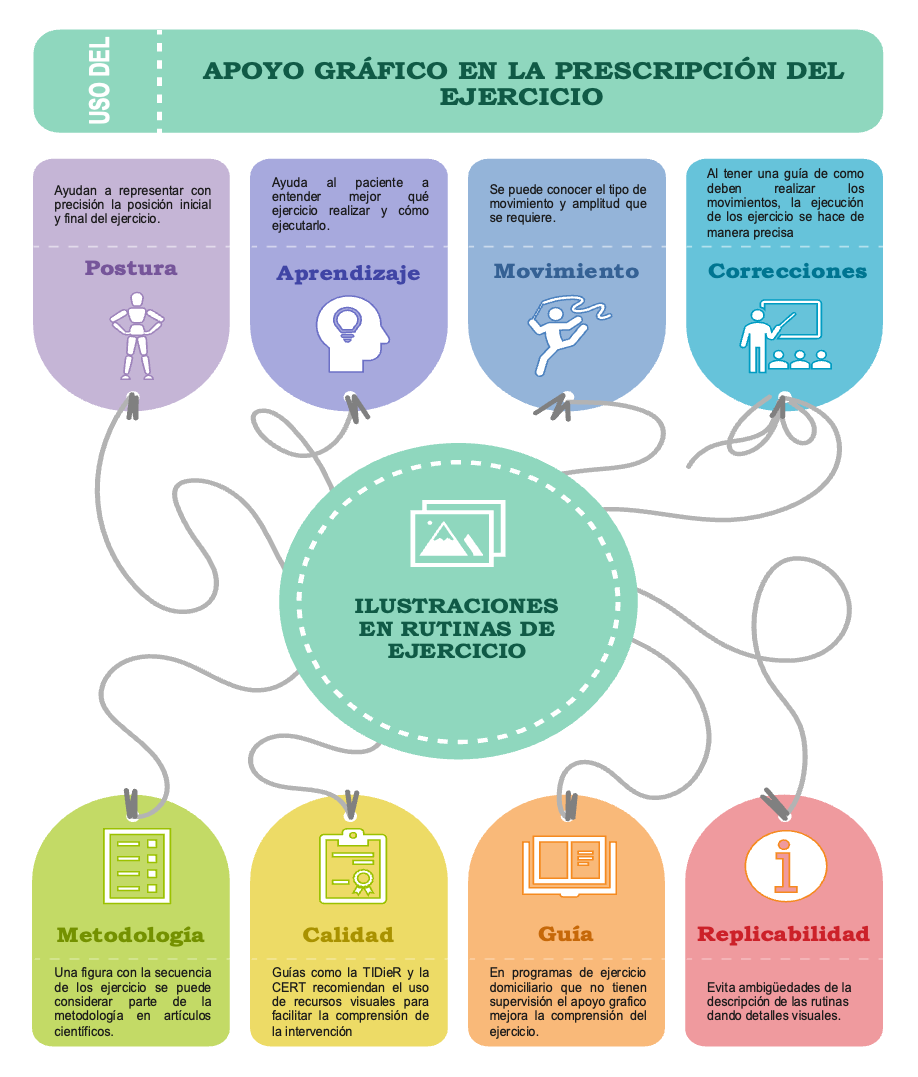
En este artículo se presenta una revisión de investigaciones sobre rutinas de ejercicio enfocadas en el fortalecimiento y la rehabilitación de la zona lumbar en personas con padecimientos del sistema musculoesquelético. El objetivo principal fue evaluar la claridad y calidad metodológica con que se reporta la prescripción del ejercicio, considerando siete parámetros clave: especificidad, frecuencia, intensidad, duración, modo, descanso y número de series. Para ello, se analizó en cada estudio si dichos parámetros estaban incluidos en su metodología; además, se revisaron los métodos empleados para medir los efectos de las rutinas, la forma de reportar los resultados y la presencia de patrones comunes que permitieran su clasificación. Entre los hallazgos destaca que la frecuencia y duración fueron las variables más consistentemente reportadas, con prescripciones de 2 a 3 sesiones por semana y programas de entre 4 y 12 semanas de intervención. Sin embargo, las metodologías de análisis mostraron una notable heterogeneidad y ausencia de estandarización, lo cual dificulta la reproducibilidad y comparabilidad entre estudios. En consecuencia, este trabajo propone una guía unificada para la descripción de rutinas, así como el uso de recursos gráficos que contribuyan a mejorar la claridad metodológica y la replicabilidad en futuras investigaciones.
Descargas
Citas
[1] I. Madan and P. R. Grime, “The management of musculoskeletal disorders in the workplace,” Best Pract Res Clin Rheumatol, vol. 29, no. 3, pp. 345–355, Jun. 2015, doi: 10.1016/j.berh.2015.03.002.
[2] R. Wall, “The effects of standing exposure on venous and muscular stress parameters: influence of dynamic muscle activity in the lower extremities, age and gender, in healthy individuals,” PhD Thesis, Universität Tübingen, Germany, 2021.
[3] Agencia Europea para la Seguridad y la Salud en el Trabajo, “Prevención de los trastornos musculoesqueléticos de origen laboral Prevención de los trastornos musculoesqueléticos de origen laboral,” Oficina de Publicaciones Oficiales de las Comunidades Europeas, Luxemburgo, pp. 1–41, 2001. Accessed: Dec. 07, 2025. [Online]. Available: http://publicaciones.srt.gob.ar/Publicaciones%20Ext/006.pdf#page=5
[4] Oxford, “Musculoskeletal Disorders,” in Occupational and Environmental Health, 6th ed., vol. 1, B. S. et al Levy, Ed., New York: Oxford University Press, Inc, 2011, ch. 16, pp. 335–365. doi: 10.1093/oso/9780190662677.001.0001.
[5] K. O’Sullivan, R. McCarthy, A. White, L. O’Sullivan, and W. Dankaerts, “Lumbar posture and trunk muscle activation during a typing task when sitting on a novel dynamic ergonomic chair,” Ergonomics, vol. 55, no. 12, pp. 1586–1595, Dec. 2012, doi: 10.1080/00140139.2012.721521.
[6] D. T. Lizier, M. V. Perez, and R. K. Sakata, “Exercises for Treatment of Nonspecific Low Back Pain,” Brazilian Journal of Anesthesiology, vol. 62, no. 6, pp. 838–846, Nov. 2012, doi: 10.1016/S0034-7094(12)70183-6.
[7] S. M. McGill, “Low Back Exercises: Evidence for Improving Exercise Regimens,” Phys Ther, vol. 78, no. 7, pp. 754–765, Jul. 1998, doi: 10.1093/ptj/78.7.754.
[8] D. Van Eerd et al., “Effectiveness of workplace interventions in the prevention of upper extremity musculoskeletal disorders and symptoms: an update of the evidence,” Occup Environ Med, vol. 73, no. 1, pp. 62–70, Jan. 2016, doi: 10.1136/oemed-2015-102992.
[9] P. Madeleine, G. P. Y. Szeto, and A. M. Heredia-Rizo, “Effects of biofeedback and strength training interventions on neck-shoulder sensory-motor responses among visual display unit users. A narrative review,” Journal of Electromyography and Kinesiology, vol. 79, p. 102936, Dec. 2024, doi: 10.1016/j.jelekin.2024.102936.
[10] C. Nüesch, J.-N. Kreppke, A. Mündermann, and L. Donath, “Effects of a Dynamic Chair on Chair Seat Motion and Trunk Muscle Activity during Office Tasks and Task Transitions,” Int J Environ Res Public Health, vol. 15, no. 12, p. 2723, Dec. 2018, doi: 10.3390/ijerph15122723.
[11] M. Curatolo and N. Bogduk, “Pharmacologic Pain Treatment of Musculoskeletal Disorders: Current Perspectives and Future Prospects,” Clin J Pain, vol. 17, pp. 25–32, Mar. 2001, Accessed: Dec. 07, 2025. [Online]. Available: https://journals.lww.com/clinicalpain/fulltext/2001/03000/Signs_and_Symptoms_of_the_Myofascial_Pain.5.aspx
[12] D. Bhoi et al., “Complementary and Alternative Modalities (CAM) for pain management in musculoskeletal diseases (MSDs),” J Clin Orthop Trauma, vol. 18, pp. 171–180, Jul. 2021, doi: 10.1016/j.jcot.2021.04.021.
[13] S. Li, T. Shen, Y. Liang, B. Bai, and Y. Zhang, “Miniscalpel‐Needle Treatment Is Effective for Work‐Related Neck and Shoulder Musculoskeletal Disorders,” Evidence-Based Complementary and Alternative Medicine, vol. 2016, no. 1, Jan. 2016, doi: 10.1155/2016/5760240.
[14] M. Viganò, V. Sansone, M. C. d’Agostino, P. Romeo, C. Perucca Orfei, and L. de Girolamo, “Mesenchymal stem cells as therapeutic target of biophysical stimulation for the treatment of musculoskeletal disorders,” J Orthop Surg Res, vol. 11, no. 1, p. 163, Dec. 2016, doi: 10.1186/s13018-016-0496-5.
[15] S. Rafique, S. M. Rana, N. Bjorsell, and M. Isaksson, “Evaluating the advantages of passive exoskeletons and recommendations for design improvements,” J Rehabil Assist Technol Eng, vol. 11, Jan. 2024, doi: 10.1177/20556683241239875.
[16] D. L. Rosero Hernández, P. A. Criollo Delgado, K. M. Martin Vergara, and J. R. Calderón Cifuentes, “Pausas activas como clave del éxito en tu trabajo,” Boletí¬n Informativo CEI, pp. 112–114, 2022. Accessed: Aug. 07, 2025. [Online]. Available: https://revistas.umariana.edu.co/index.php/BoletinInformativoCEI/article/view/3301
[17] G. Skamagki, A. King, M. Duncan, and C. Wåhlin, “A systematic review on workplace interventions to manage chronic musculoskeletal conditions,” Physiotherapy Research International, vol. 23, no. 4, Oct. 2018, doi: 10.1002/pri.1738.
[18] S. A. Prince et al., “The effect of leisure time physical activity and sedentary behaviour on the health of workers with different occupational physical activity demands: a systematic review,” International Journal of Behavioral Nutrition and Physical Activity, vol. 18, no. 1, p. 100, Dec. 2021, doi: 10.1186/s12966-021-01166-z.
[19] M. Pietilä, “The Effect of active breaks for wellbeing at work,” M.A. thesis, Satakunta University, Pori, 2022.
[20] M. Ramezani et al., “Workplace interventions for increasing physical activity in employees: A systematic review,” J Occup Health, vol. 64, no. 1, Jan. 2022, doi: 10.1002/1348-9585.12358.
[21] J. Mayer, V. Mooney, and S. Dagenais, “Evidence-informed management of chronic low back pain with lumbar extensor strengthening exercises,” The Spine Journal, vol. 8, no. 1, pp. 96–113, Jan. 2008, doi: 10.1016/j.spinee.2007.09.008.
[22] W. S. Marras and K. P. Granata, “Spine loading during trunk lateral bending motions,” J Biomech, vol. 30, no. 7, pp. 697–703, Jul. 1997, doi: 10.1016/S0021-9290(97)00010-9.
[23] J. P. A. Arokoski et al., “Back and hip extensor muscle function during therapeutic exercises,” Arch Phys Med Rehabil, vol. 80, no. 7, pp. 842–850, Jul. 1999, doi: 10.1016/S0003-9993(99)90237-X.
[24] G. A. Koumantakis, P. J. Watson, and J. A. Oldham, “Trunk Muscle Stabilization Training Plus General Exercise Versus General Exercise Only: Randomized Controlled Trial of Patients With Recurrent Low Back Pain,” Phys Ther, vol. 85, no. 3, pp. 209–225, Mar. 2005, doi: 10.1093/ptj/85.3.209.
[25] H. J. Moon et al., “Effect of Lumbar Stabilization and Dynamic Lumbar Strengthening Exercises in Patients With Chronic Low Back Pain,” Ann Rehabil Med, vol. 37, no. 1, p. 110, 2013, doi: 10.5535/arm.2013.37.1.110.
[26] J. H. Suh, H. Kim, G. P. Jung, J. Y. Ko, and J. S. Ryu, “The effect of lumbar stabilization and walking exercises on chronic low back pain,” Medicine, vol. 98, no. 26, p. e16173, Jun. 2019, doi: 10.1097/MD.0000000000016173.
[27] S. Kim and Y. Jee, “Effects of 3D Moving Platform Exercise on Physiological Parameters and Pain in Patients with Chronic Low Back Pain,” Medicina (B Aires), vol. 56, no. 7, p. 351, Jul. 2020, doi: 10.3390/medicina56070351.
[28] R. Puntumetakul et al., “The Effects of Core Stabilization Exercise with the Abdominal Drawing-in Maneuver Technique versus General Strengthening Exercise on Lumbar Segmental Motion in Patients with Clinical Lumbar Instability: A Randomized Controlled Trial with 12-Month Follow-Up,” Int J Environ Res Public Health, vol. 18, no. 15, p. 7811, Jul. 2021, doi: 10.3390/ijerph18157811.
[29] F. Aqil et al., “Comparison of Mckenzie approach versus Lumbar Stabilization Exercises in the treatment of chronic low back pain,” Rehman Journal of Health Sciences, vol. 3, no. 1, pp. 24–31, Jul. 2021, doi: 10.52442/rjhs.v3i1.62.
[30] D. Vlažná et al., “Assessment of Lumbar Extensor Muscles in the Context of Trunk Function, a Pilot Study in Healthy Individuals,” Applied Sciences, vol. 11, no. 20, p. 9518, Oct. 2021, doi: 10.3390/app11209518.
[31] K. Miura et al., “Exercise training using hybrid assistive limb (HAL) lumbar type for locomotive syndrome: a pilot study,” BMC Musculoskelet Disord, vol. 22, no. 1, p. 533, Dec. 2021, doi: 10.1186/s12891-021-04421-3.
[32] P. Niewiadomy, K. Szuścik-Niewiadomy, M. Kuszewski, A. Kurpas, and M. Kochan, “The influence of rotational movement exercise on the abdominal muscle thickness and trunk mobility – Randomized control trial,” J Bodyw Mov Ther, vol. 27, pp. 464–471, Jul. 2021, doi: 10.1016/j.jbmt.2021.05.008.
[33] E.-J. Jung and J.-S. Oh, “The Effects of Abdominal Hollowing and Bracing Maneuvers on Trunk Muscle Activity and Pelvic Rotation Angle during Leg Pull Front Pilates Exercise,” Healthcare, vol. 11, no. 1, p. 60, Dec. 2022, doi: 10.3390/healthcare11010060.
[34] D. Marcos-Lorenzo, T. Frett, A. Gil-Martinez, M. Speer, J. Swanenburg, and D. A. Green, “Effect of trunk exercise upon lumbar IVD height and vertebral compliance when performed supine with 1 g at the CoM compared to upright in 1 g,” BMC Sports Sci Med Rehabil, vol. 14, no. 1, p. 177, Oct. 2022, doi: 10.1186/s13102-022-00575-2.
[35] J. M. Mayer, B. E. Udermann, and J. L. Verna, “Electromyographic Analysis of the Lumbar Extensor Muscles during Dynamic Exercise on a Home Exercise Device,” J Funct Morphol Kinesiol, vol. 7, no. 1, p. 26, Mar. 2022, doi: 10.3390/jfmk7010026.
[36] A. Abdi, S. R. Bagheri, Z. Shekarbeigi, S. Usefvand, and E. Alimohammadi, “The effect of repeated flexion-based exercises versus extension-based exercises on the clinical outcomes of patients with lumbar disk herniation surgery: a randomized clinical trial,” Neurol Res, vol. 45, no. 1, pp. 28–40, Jan. 2023, doi: 10.1080/01616412.2022.2116686.
[37] P. Blanco-Giménez et al., “Clinical relevance of combined treatment with exercise in patients with chronic low back pain: a randomized controlled trial,” Sci Rep, vol. 14, no. 1, p. 17042, Jul. 2024, doi: 10.1038/s41598-024-68192-2.
[38] K.-J. Ko, G.-C. Ha, Y.-S. Yook, and S.-J. Kang, “Effects of 12-week lumbar stabilization exercise and sling exercise on lumbosacral region angle, lumbar muscle strength, and pain scale of patients with chronic low back pain,” The Journal of Physical Therapy Science, vol. 30, pp. 18–22, 2018, doi: 10.1589/jpts.30.18.
[39] A. Cosgrove and C. Rasmussen, Diseño De Programas De Entrenamiento: Guía práctica para profesionales del acondicionamiento físico y el deporte, 1st ed. Madrid: Human Kinetics, 2021.
[40] M. Lee, C. Song, Y. Jo, D. Ha, and D. Han, “The effects of core muscle release technique on lumbar spine deformation and low back pain,” J Phys Ther Sci, vol. 27, no. 5, pp. 1519–1522, 2015, doi: 10.1589/jpts.27.1519.
[41] M. M. Elsayyad, N. M. Abdel-Aal, and M. E. Helal, “Effect of Adding Neural Mobilization Versus Myofascial Release to Stabilization Exercises after Lumbar Spine Fusion: A Randomized Controlled Trial,” Arch Phys Med Rehabil, vol. 102, no. 2, pp. 251–260, Feb. 2021, doi: 10.1016/j.apmr.2020.07.009.
[42] M. Fortin et al., “The effects of combined motor control and isolated extensor strengthening versus general exercise on paraspinal muscle morphology and function in patients with chronic low back pain: a randomised controlled trial protocol,” BMC Musculoskelet Disord, vol. 22, no. 1, p. 472, Dec. 2021, doi: 10.1186/s12891-021-04346-x.
[43] T. I. Nava-Bringas et al., “Stabilization Exercises Versus Flexion Exercises in Degenerative Spondylolisthesis: A Randomized Controlled Trial,” Phys Ther, vol. 101, no. 8, Aug. 2021, doi: 10.1093/ptj/pzab108.
[44] O. Ilves et al., “Effectiveness of a 12-month home-based exercise program on trunk muscle strength and spine function after lumbar spine fusion surgery: a randomized controlled trial,” Disabil Rehabil, vol. 44, no. 4, pp. 549–557, Feb. 2022, doi: 10.1080/09638288.2020.1772383.
[45] P. Dhake, S. Shinde, and S. Aphale, “Effect of Lumbar Spinal Stabilization Exercises Along With Neural Tissue Mobilization on Pain and Spinal Dysfunction in Failed Back Surgery Syndrome,” Cureus, Oct. 2024, doi: 10.7759/cureus.72396.
[46] C.-H. Park et al., “Long-term effects of lumbar flexion versus extension exercises for chronic axial low back pain: a randomized controlled trial,” Sci Rep, vol. 14, no. 1, p. 2714, Feb. 2024, doi: 10.1038/s41598-024-51769-2.
[47] A. Biscarini et al., “Bilateral Activity of Spine Extensors and Rotators during Asymmetric Lumbar Stabilization Exercises Executed in Prone, Quadruped, and Standing-Prone Positions,” Applied Sciences, vol. 14, no. 4, p. 1331, Feb. 2024, doi: 10.3390/app14041331.
[48] F. Amjad, M. A. Mohseni-Bandpei, S. A. Gilani, A. Ahmad, and A. Hanif, “Effects of non-surgical decompression therapy in addition to routine physical therapy on pain, range of motion, endurance, functional disability and quality of life versus routine physical therapy alone in patients with lumbar radiculopathy; a randomized controlled trial,” BMC Musculoskelet Disord, vol. 23, no. 1, p. 255, Mar. 2022, doi: 10.1186/s12891-022-05196-x.
[49] E. Balaji, K. Murugavel, M. Rajkumar, S. Logeswaran, V. Vijayasankar, and C. Devaraj, “The Effect of a Six-Week Course of Surya Namaskar Practice on Back Flexibility and Lumbar Flexion in Male College Students,” Physical Education Theory and Methodology, vol. 24, no. 1, pp. 41–46, Feb. 2024, doi: 10.17309/tmfv.2024.1.05.
[50] J. M. Mayer, J. E. Graves, V. L. Robertson, E. A. Pierra, J. L. Verna, and L. L. Ploutz-Snyder, “Electromyographic activity of the lumbar extensor muscles: Effect of angle and hand position during Roman Chair Exercise,” Arch Phys Med Rehabil, vol. 80, no. 7, pp. 751–755, Jul. 1999, doi: 10.1016/S0003-9993(99)90222-8.
[51] H.-R. Seo and T.-H. Kim, “The effects of Gyrotonic expansion system exercise and trunk stability exercise on muscle activity and lumbar stability for the subjects with chronic low back pain,” J Exerc Rehabil, vol. 15, no. 1, pp. 129–133, Feb. 2019, doi: 10.12965/jer.1836512.256.
[52] B. Rosenstein et al., “Comparison of Combined Motor Control Training and Isolated Extensor Strengthening Versus General Exercise on Lumbar Paraspinal Muscle Health and Associations With Patient-Reported Outcome Measures in Chronic Low Back Pain Patients: A Randomized Controlled Trial,” Global Spine J, Mar. 2025, doi: 10.1177/21925682251324490.
[53] K. L. Moore, A. F. Dalley, and A. M. R. Agur, Anatomía con orientación clínica, 8th ed. Filadelfia: Wolters Kluwer, 2017.
[54] T. C. Hoffmann et al., “Better reporting of interventions: template for intervention description and replication (TIDieR) checklist and guide,” BMJ, vol. 348, no. mar07 3, pp. g1687–g1687, Mar. 2014, doi: 10.1136/bmj.g1687.
[55] S. C. Slade, C. E. Dionne, M. Underwood, and R. Buchbinder, “Consensus on Exercise Reporting Template (CERT): Explanation and Elaboration Statement,” Br J Sports Med, vol. 50, no. 23, pp. 1428–1437, Dec. 2016, doi: 10.1136/bjsports-2016-096651.
[56] ICMJE - International Committee of Medical Journal Editors, “Recommendations for the Conduct, Reporting, Editing, and Publication of Scholarly work in Medical Journals.” Accessed: Aug. 11, 2025. [Online]. Available: https://www.icmje.org/
Publicado
Cómo citar
Número
Sección
Categorías
Licencia
Derechos de autor 2025 Gonzalo Emiliano Sánchez-Cortés, Arturo Abúndez-Pliego

Esta obra está bajo una licencia internacional Creative Commons Atribución 4.0.
Los autores/as que publiquen en esta revista aceptan las siguientes condiciones:
- Los autores/as conservan los derechos de autor y ceden a la revista el derecho de la primera publicación, con el trabajo registrado con la licencia de atribución de Creative Commons 4.0, que permite a terceros utilizar lo publicado siempre que mencionen la autoría del trabajo y a la primera publicación en esta revista.
- Los autores/as pueden realizar otros acuerdos contractuales independientes y adicionales para la distribución no exclusiva de la versión del artículo publicado en esta revista (p. ej., incluirlo en un repositorio institucional o publicarlo en un libro) siempre que indiquen claramente que el trabajo se publicó por primera vez en esta revista.
- Se permite y recomienda a los autores/as a compartir su trabajo en línea (por ejemplo: en repositorios institucionales o páginas web personales) antes y durante el proceso de envío del manuscrito, ya que puede conducir a intercambios productivos, a una mayor y más rápida citación del trabajo publicado (vea The Effect of Open Access).