Efecto de un aditivo biodegradable en las propiedades mecánicas de películas sopladas de LDPE: un enfoque estadístico y de aprendizaje automático
DOI:
https://doi.org/10.37636/recit.v9n2e420Palabras clave:
Extrusión soplada, Propiedades mecánicas, Polietileno, ANOVA, Aprendizaje automáticoResumen
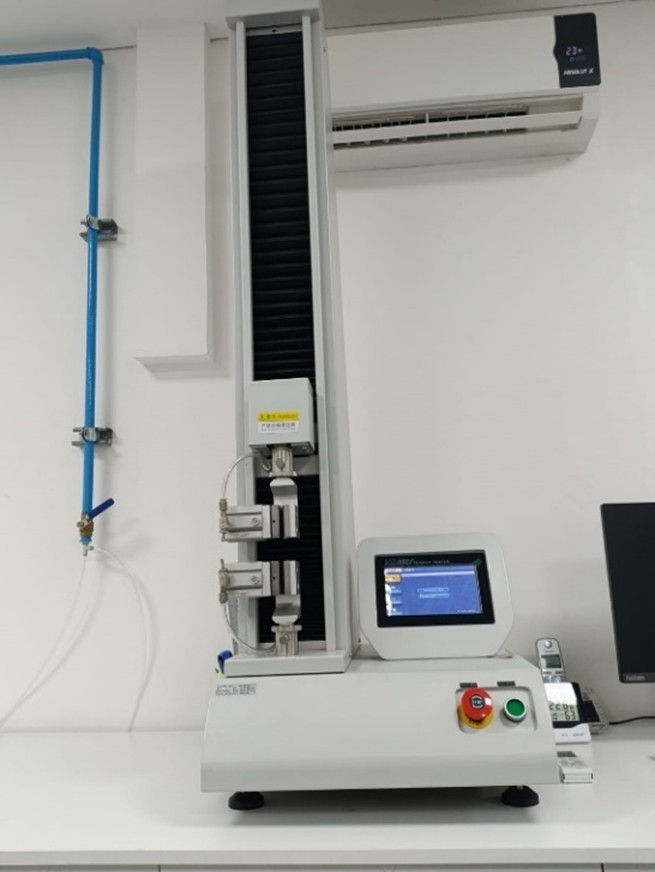
El estudio evalúa el efecto que tiene la adición del compuesto biodegradable P–Life sobre las propiedades mecánicas de bolsas para hielo “IB”, fabricadas a partir de polietileno de baja densidad (LDPE). Se recolectaron datos de resistencia a la tracción, elongación, resistencia al rasgado, resistencia al punzonado e impacto durante un periodo de seis meses en una planta manufacturera. Se estudiaron correlaciones entre las propiedades mecánicas y las formulaciones con (B) y sin aditivo biodegradable (NB). El análisis de Pearson mostró correlaciones positivas entre el grosor de la película y sus propiedades (r ≥ 0.5). El ANOVA reveló diferencias significativas (p ≤ 0.05) entre ambas formulaciones en algunas propiedades. Además, se desarrolló un modelo predictivo mediante el algoritmo M5P con una precisión del 94,147%, validado con muestras reales. Los resultados sugieren que el uso de inteligencia artificial es viable para predecir propiedades mecánicas en procesos de extrusión de polímeros, lo que puede optimizar el control de calidad industrial.
Descargas
Referencias
[1] I. Santos Silva et al., "Malt bagasse in extruded wheat flour and PBAT biodegradable films," Ind. Crops Prod., vol. 220, p. 119274, Nov. 2024, doi: 10.1016/j.indcrop.2024.119274. DOI: https://doi.org/10.1016/j.indcrop.2024.119274
[2] A. Martínez-Camacho et al., "Extruded films of blended chitosan, low density polyethylene and ethylene acrylic acid," Carbohydr. Polym., vol. 91, pp. 666–674, Aug. 2012, doi: 10.1016/j.carbpol.2012.08.076. DOI: https://doi.org/10.1016/j.carbpol.2012.08.076
[3] H. Najahi et al., "Plastic pollution in food packaging systems: Impact on human health, socioeconomic considerations and regulatory framework," Elsevier B.V., May 2025, doi: 10.1016/j.hazadv.2025.100667. DOI: https://doi.org/10.1016/j.hazadv.2025.100667
[4] B. Ucpinar, F. Ugur, and A. Aytac, "Active packaging films based on poly(butylene succinate) films reinforced with alkaline halloysite nanotubes: Production, properties, and fruit packaging applications," Appl. Clay Sci., vol. 256, p. 107517, Jul. 2024, doi: 10.1016/j.clay.2024.107517. DOI: https://doi.org/10.1016/j.clay.2024.107517
[5] L. Yi et al., "Simple but efficient preparation of high-strength, heat-resistant, and high-barrier PLA/TOBC plastic packaging containers via Pickering emulsion," Compos. Commun., vol. 56, p. 102420, Jun. 2025, doi: 10.1016/j.coco.2025.102420. DOI: https://doi.org/10.1016/j.coco.2025.102420
[6] P-Life American, "Aditivos plásticos biodegradables. Plásticos biodegradables, una realidad," plifeamerican.com. https://plifeamerican.com (accessed May 5, 2025).
[7] T. Zhang, W. Han, C. Zhang, and Y. Weng, "Effect of chain extender and light stabilizer on the weathering resistance of PBAT/PLA blend films prepared by extrusion blowing," Polym. Degrad. Stabil., vol. 183, p. 109455, Jan. 2021, doi: 10.1016/j.polymdegradstab.2020.109455. DOI: https://doi.org/10.1016/j.polymdegradstab.2020.109455
[8] J. Gálvez et al., "Effect of extrusion screw speed and plasticizer proportions on the rheological, thermal, mechanical, morphological and superficial properties of PLA," Polymers, vol. 12, no. 9, p. 2111, Sep. 2020, doi: 10.3390/polym12092111. DOI: https://doi.org/10.3390/polym12092111
[9] H. Wu et al., "Mechanical activation-enhanced metal-organic coordination strategy to Fabricate high-performance starch/polyvinyl alcohol films by extrusion blowing," Carbohydr. Polym., vol. 333, p. 121982, Feb. 2024, doi: 10.1016/j.carbpol.2024.121982. DOI: https://doi.org/10.1016/j.carbpol.2024.121982
[10] C. K. Chai, "Rheological studies of molecular effect and processing conditions on blown film property of polyethylenes," Polymer, vol. 267, p. 125668, Feb. 2023, doi: 10.1016/j.polymer.2022.125668. DOI: https://doi.org/10.1016/j.polymer.2022.125668
[11] B. E. Itabana, A. K. Pal, A. K. Mohanty, and M. Misra, "Biodegradable blown film composite from poly(butylene adipate-co-terephthalate) and talc: Effect of uniaxial stretching on mechanical and barrier properties," Food Packag. Shelf Life, vol. 39, p. 101147, Nov. 2023, doi: 10.1016/j.fpsl.2023.101147. DOI: https://doi.org/10.1016/j.fpsl.2023.101147
[12] J. Park, K.-Y. Kim, and R. Sohmshetty, "A prediction modeling framework: Toward integration of noisy manufacturing data and product design," ASME, 2015. [Online]. Available: http://www.asme.org/about-asme/terms-of-use DOI: https://doi.org/10.1115/DETC2015-46236
[13] H. A. Dahish and A. D. Almutairi, "Compressive strength prediction models for concrete containing nano materials and exposed to elevated temperatures," Results Eng., vol. 25, p. 103975, Mar. 2025, doi: 10.1016/j.rineng.2025.103975. DOI: https://doi.org/10.1016/j.rineng.2025.103975
[14] S. Altarazi, R. Allaf, and F. Alhindawi, "Machine learning models for predicting and classifying the tensile strength of polymeric films fabricated via different production processes," Materials, vol. 12, no. 9, p. 1475, 2019, doi: 10.3390/ma12091475. DOI: https://doi.org/10.3390/ma12091475
[15] S. K. Dang and Singh, "Predicting tensile-shear strength of nugget using M5P model tree and random forest: An analysis," Comput. Ind., vol. 124, p. 103345, Jan. 2021, doi: 10.1016/j.compind.2020.103345. DOI: https://doi.org/10.1016/j.compind.2020.103345
[16] C. Herriott and A. D. Spear, "Predicting microstructure-dependent mechanical properties in additively manufactured metals with machine- and deep-learning methods," Comput. Mater. Sci., vol. 175, p. 109599, Apr. 2020, doi: 10.1016/j.commatsci.2020.109599. DOI: https://doi.org/10.1016/j.commatsci.2020.109599
[17] M. Abdallah et al., "The Machine-Learning-Based Prediction of the Punching Shear Capacity of Reinforced Concrete Flat Slabs: An Advanced M5P Model Tree Approach," Appl. Sci., vol. 13, p. 8325, Jul. 2023, doi: 10.3390/app13148325. DOI: https://doi.org/10.3390/app13148325
[18] C. Machello et al., "Tree-based machine learning approach to modelling tensile strength retention of Fibre Reinforced Polymer composites exposed to elevated temperatures," Compos. Part B Eng., vol. 270, p. 111132, Nov. 2023, doi: 10.1016/j.compositesb.2023.111132. DOI: https://doi.org/10.1016/j.compositesb.2023.111132
[19] Y. Boon, S. Joshi, S. Bhudolia, and G. Gohel, "Recent Advances on the Design Automation for Performance-Optimized Fiber Reinforced Polymer Composite Components," Compos. Sci., vol. 4, p. 60, May 2020, doi: 10.3390/jcs4020061. DOI: https://doi.org/10.3390/jcs4020061
[20] A. Mohammed et al., "Modeling the Impact of Liquid Polymers on Concrete Stability in Terms of a Slump and Compressive Strength," Appl. Sci., vol. 13, p. 1208, Jan. 2023, doi: 10.3390/app13021208. DOI: https://doi.org/10.3390/app13021208
[21] E. Temizhan, H. Mirtagioglu, and M. Mendes, "Which Correlation Coefficient Should Be Used for Investigating Relations between Quantitative Variables?," Am. Sci. Res. J. Eng. Technol. Sci., vol. 61, p. 5524, Dec. 2021. [Online]. Available: https://www.researchgate.net/publication/359579944
[22] A. Atkinson, M. Riani, and A. Corbellini, "The Box–Cox Transformation: Review and Extensions," Stat. Sci., vol. 36, pp. 239–255, 2021, doi: 10.1214/20-STS778. DOI: https://doi.org/10.1214/20-STS778
[23] J. Lu, B. Nguyen, and J. Powers, "Mechanical properties of 3 hydrophilic addition silicone and polyether elastomeric impression materials," J. Prosthet. Dent., vol. 467, p. 6516, Mar. 2004, doi: 10.1016/j.prosdent.2004.05.016. DOI: https://doi.org/10.1016/j.prosdent.2004.05.016
[24] N. Mallegni, T. V. Phuong, M. B. Coltelli, P. Cinelli, and A. Lazzeri, "Poly(lactic acid) (PLA) based tear resistant and biodegradable flexible films by blown film extrusion," Materials, vol. 11, no. 1, p. 148, Jan. 2018, doi: 10.3390/ma11010148. DOI: https://doi.org/10.3390/ma11010148
[25] L. Aliotta et al., "Tearing fracture of poly(lactic acid) (PLA)/poly(butylene succinate-co-adipate) (PBSA) cast extruded films: Effect of the PBSA content," Eng. Fract. Mech., vol. 289, p. 109450, Sep. 2023, doi: 10.1016/j.engfracmech.2023.109450. DOI: https://doi.org/10.1016/j.engfracmech.2023.109450
[26] L. Gómez-Bachar, M. Vilcovsky, P. González-Seligra, and L. Famá, "Effects of PVA and yerba mate extract on extruded films of carboxymethyl cassava starch/PVA blends for antioxidant and mechanically resistant," Int. J. Biol. Macromol., vol. 268, p. 131464, Apr. 2024, doi: 10.1016/j.ijbiomac.2024.131464. DOI: https://doi.org/10.1016/j.ijbiomac.2024.131464
[27] S. Kim, S. Kang, Y. Kim, and M. Park, "Industrial-scale blown active packaging film with essential oils: Properties, dual-functional performance, and box packaging application of instant noodles," Food Packag. Shelf Life, vol. 43, p. 101276, Apr. 2024, doi: 10.1016/j.fpsl.2024.101276. DOI: https://doi.org/10.1016/j.fpsl.2024.101276
[28] X. Zhang, S. Ajji, and M. Huneault, "Oriented structure and anisotropy properties of polymer blown films: HDPE, LLDPE and LDPE," Polymer, vol. 45, pp. 217–229, Oct. 2003, doi: 10.1016/j.polymer.2003.10.057. DOI: https://doi.org/10.1016/j.polymer.2003.10.057
[29] W. Zhou, D. Zha, X. Zhang, J. Xu, B. Gou, and Y. Huang, "Ordered long-period stacking ordered phase..." [Incompleta en el texto original].
[30] B. Zhu et al., "Enhancing the mechanical properties of polylactic acid (PLA) composite films using Pueraria lobata root microcrystalline cellulose," Int. J. Biol. Macromol., vol. 279, p. 135579, Nov. 2024, doi: 10.1016/j.ijbiomac.2024.135579. DOI: https://doi.org/10.1016/j.ijbiomac.2024.135579
[31] I. Witten, "Inducing model trees for continuous classes," 1997. [Online]. Available: https://www.researchgate.net/publication/2737587
[32] S. Altarazi, M. Ammouri, and A. Hijazi, "Artificial neural network modeling to evaluate polyvinylchloride composites’ properties," Comput. Mater. Sci., vol. 153, pp. 1–9, Oct. 2018, doi: 10.1016/j.commatsci.2018.06.003. DOI: https://doi.org/10.1016/j.commatsci.2018.06.003
[34] K. Balkey, A. Domenic, A. Guzmán, and S. Weinman, "Ejemplos de uso de códigos y normas para los estudiantes de ingeniería mecánica y otros campos," 2021. [Online]. Available: http://www.asme.org/about-asme
[35] A. Gaspar-Cunha, J. A. Covas, and J. Sikora, "Optimization of polymer processing: A review (Part II - Molding technologies)," Materials, vol. 15, no. 3, p. 1138, Feb. 2022, doi: 10.3390/ma15031138. DOI: https://doi.org/10.3390/ma15031138
Descargas
Publicado
Número
Sección
Categorías
Licencia
Derechos de autor 2026 Gilberto Alarcón Aguilar, Alam Josué Reyes López, Frixia Galán-Méndez

Esta obra está bajo una licencia internacional Creative Commons Atribución 4.0.
Los autores/as que publiquen en esta revista aceptan las siguientes condiciones:
- Los autores/as conservan los derechos de autor y ceden a la revista el derecho de la primera publicación, con el trabajo registrado con la licencia de atribución de Creative Commons 4.0, que permite a terceros utilizar lo publicado siempre que mencionen la autoría del trabajo y a la primera publicación en esta revista.
- Los autores/as pueden realizar otros acuerdos contractuales independientes y adicionales para la distribución no exclusiva de la versión del artículo publicado en esta revista (p. ej., incluirlo en un repositorio institucional o publicarlo en un libro) siempre que indiquen claramente que el trabajo se publicó por primera vez en esta revista.
- Se permite y recomienda a los autores/as a compartir su trabajo en línea (por ejemplo: en repositorios institucionales o páginas web personales) antes y durante el proceso de envío del manuscrito, ya que puede conducir a intercambios productivos, a una mayor y más rápida citación del trabajo publicado (vea The Effect of Open Access).
Cómo citar